What in your opinion is the state of the Somaliland and Somalia talks with regards to its timeliness, Somaliland preparedness, Process transparency, usefulness, the possible scenarios of its outcome? What are the complexities surrounding the Somaliland recognition and the way forward?
The articles in this issue of Perspectives seek to reflect on the extent to which African legislatures have taken steps that mark their shift from being the “weakest link” of government to stronger, independent institutions. In essence, we ask – do African Parliaments really occupy the privileged position accorded to them in representational democracies
Although there continues to be widespread popular support across the African continent for the International Criminal Court (ICC) and its mandate to prosecute high-level individuals accused of perpetrating international crimes, strong anti-ICC sentiments are brewing among parts of Africa’s political elite and state actors.
This month, two events occur back-to-back: the United Nations Conference on Sustainable Development (“Rio +20”) in Brazil and the Group of 20 (G20) Summit, in Mexico. This paper asks how the powerful G20 might influence outcomes of Rio+20.
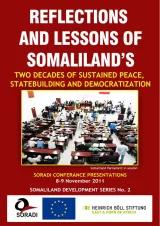
The conferences focus was on the conflict resolution progress, and prospects for the Somalia state re-establishment. At the minimum, state re-establishment discussions delved into matters of national security, public service delivery, civil society and public participation in governance processes.
The G20’s commitment to conventional solutions obscures the possibility of other alternatives. Even though the alternatives present challenges in terms of replication, cost, and scale, the G20 summit in Mexico in June 2012 should re-cast the criteria for selecting and financing energy projects to highlight modular, renewable energy solutions.
What lessons has Somaliland learnt from two decades of sustained state building, local institutional development and democratization and what's the way forward?