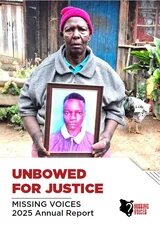
The 2025 Missing Voices Annual Report documents 131 cases of extrajudicial killings and enforced disappearances in Kenya, reflecting an overall decline in violations compared to 2024. However, this apparent progress masks a worrying trend: a sharp rise in police killings and continued concerns about the use of excessive force, particularly during periods of public protest.
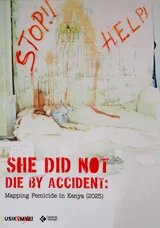
At least 220 women and girls were killed in Kenya in 2025, most by people they trusted, and often after seeking help. The Femicide Report 2025 shows that these deaths were not accidents but the result of ignored warning signs, social silence, and systemic failure. Ending femicide requires naming it, tracking it, and acting decisively to protect women before violence becomes fatal.
The Heinrich Böll Foundation (hbs) Nairobi, in partnership with the Initiative for Equality and Non-Discrimination (INEND), has released a new publication titled Reshaping Narratives: Media Engagement Strategies for LGBTIQ+ Persons in Kenya. The report examines how the Kenyan media portrays sexual and gender minorities and explores practical strategies for fostering more inclusive, accurate, and ethical reporting. By combining community insights, journalist perspectives, and media analysis, the study highlights both the progress made and the ongoing challenges in ensuring fair representation, dignity, and equality for LGBTIQ+ persons in Kenya.
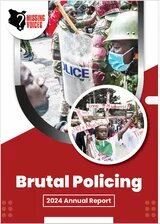
Missing Voices documented a total of 159 cases of extrajudicial killings and enforced disappearances in 2024. Out of the 159 cases, 104 (65%) were incidents of police-related killings, while 55 (35%) were those of enforced disappearances. 2024 marked the year that the coalition recorded the highest number of cases of enforced disappearances. Before then, 2019 had the highest number of cases of enforced disappearances at 38.
The Soil Atlas Kenya Edition 2025 has been adapted from the original version of the Soil Atlas 2024 published in Germany in 2024, to include facts and figures on vital resource on soil relevant to the situation in Kenya. Its contents will locate the potential of sustainable and fair land use for climate protection and biodiversity.
This context paper captures diverse perspectives from a consultation held in Dar es Salaam in December 2023. The paper outlines Tanzania's current energy mix and the energy choices facing its society. It also addresses energy investments aimed at reducing energy poverty and improving the well-being of Tanzanian citizens. Additionally, the paper discusses the consequences of today's energy choices and outlines a research agenda, highlighting key thematic areas and energy topics that require thorough investigation for the Sustainable Energy Futures Tanzania Report.
Inspired by the Netflix documentary Rotten, this issue of Cha Kula by the Route to Food Initiative, highlights the absurdities in our food systems in Kenya, both historically and in the contemporary moment.
Cha Kula is a bi-annual publication that gives prominence to food as a political issue in Kenya. It calls into question the power dynamics that dominate our food system, which determines who eats, what they eat and who goes hungry.
This background paper Rethinking Agriculture: Soil Health for Sustainable Farming in Africa explores the importance of soil health and the need to a shift away from sole reliance on synthetic fertilizers remains an imperative discourse for sustainable agriculture in Africa.
This paper was produced in collaboration with the Heinrich Boell Berlin Office and African offices in Nairobi, Abuja, and South Africa.
On Wednesday, April 24th, 2024, the Missing Voices Coalition launched its 2023 Annual Report focused on the theme "End Police Impunity" at the Heinrich Boell Foundation, Nairobi Office.
This marks the fourth report and a significant achievement for the Coalition since its inception. The report highlighted several key developments related to discussions on police impunity in the country for the year 2023. One major highlight was the reduction in extrajudicial killings and enforced disappearances compared to the previous year. The report detailed a 9.2% decrease in extrajudicial killings, from 130 in 2022 to 118 in 2023, and a 54.5% decrease in enforced disappearances, from 22 in 2022 to 10 in 2023.